
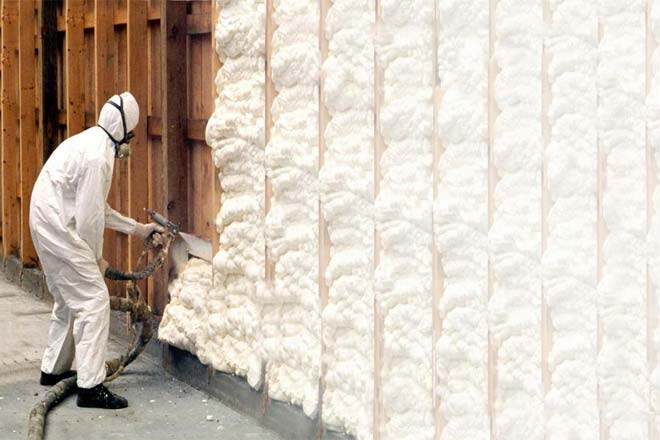
Interior wall insulation is not always required, but it does provide several advantages. By insulating interior walls, you can lower noise levels, increase energy efficiency, provide fire protection, and prevent moisture issues.
Spray foam insulation is considered a superior alternative to fiberglass insulation for a variety of reasons. Spray foam insulation’s ability to provide a more comprehensive seal, greater R-value, and resistance to moisture and mold are just a few factors that make it better than fiberglass.
Overall, spray foam insulation is a better option for interior wall insulation due to its many advantages. If you are looking to insulate your interior walls, spray foam should be your first choice.
Are you wondering what are some of the reasons to choose spray foam insulation as a preferred option for your homes?
Spray Foam provides a complete coverage
The most notable advantage of spray foam insulation is that it can seal a larger surface than fiberglass. Spray foam, unlike fiberglass, can fill in holes and cracks that fiberglass cannot, resulting in fewer places for heat or cold to escape. Furthermore, spray foam insulation can adapt to changes as needed, further reducing openings.
Spray Foam has a Higher R-Value.
Spray foam insulation, like fiberglass, has a higher R-value than cellulose. The R-value of insulation is a number that assesses how well it resists heat flow, and the higher the value, the better. Spray foam has an R-value of 6 to 8, while fiberglass has an R-value of around 3.
The Cost of Spray Foam vs. Fiberglass
According to many studies, spray foam is a more effective insulator than fiberglass. Spray foam insulation, on the other hand, is generally more expensive than fiberglass insulation. Spray foam insulation costs vary depending on the type and size of your project, but they are typically twice as much as fiberglass.
Length of Life
Spray foam insulation has a longer lifespan than fiberglass insulation. Spray foam does not deteriorate or settle over time, like glass, unlike fiberglass. Spray foam insulation may endure for decades, while fiberglass is limited to around a decade or a little more.
Easier to install
Spray foam offers several benefits over fiberglass, including the fact that it is much easier to install. Spray foam may be sprayed directly into position, whereas fiberglass must first be cut and mated. It makes spray foam a quicker and easier alternative to install, which can help you save time and money.
Mold and Moisture Resistant
Spray foam insulation is also moisture- and mold-resistant. It is because spray foam creates a tight seal, preventing water from entering. Fiberglass, on the other hand, does not keep moisture out as effectively as spray foam.
Sound and Allergy Considerations
If you’re concerned about noise or allergies, spray foam insulation is an effective alternative. Because spray foam creates a tight seal that helps minimize sound levels and keep pollutants out of your home, it’s an excellent choice if you’re worried about either of these issues.
Fire Hazards
Another factor to consider when picking spray foam over fiberglass is the fire danger. Spray foam is an explosive substance that could create a fire if not installed correctly. Spray foam, on the other hand, is self-extinguishing, making it unlikely to cause a fire if installed correctly.
Fiberglass is non-combustible and hence poses no fire danger. Fiberglass may be a better option if you’re concerned about fire safety.
Spray foam is the superior option for insulation, whether you’re searching for the most effective or cost-effective solution. It has a higher R-value and is more resistant to moisture and mold than fiberglass. Therefore, spray foam is the way to go if you want an insulating, safe, successful, and energy-efficient material.
If you wish to install insulation in your walls at home, contact businesses working on spray foam insulation in NYC and get a quote. We hope this post was helpful and informative. Thank you for reading!
